
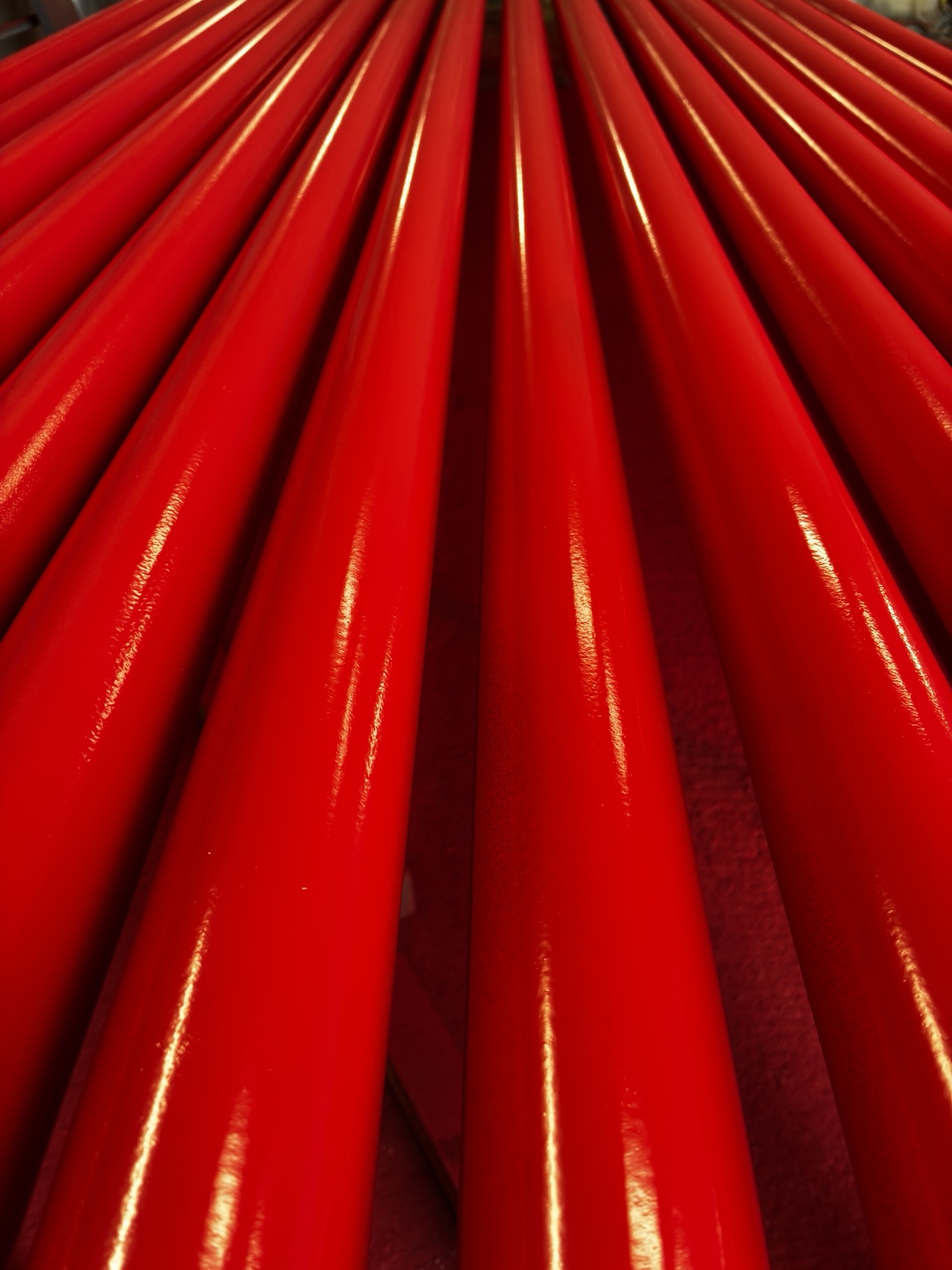
Metal structures are exposed every day to moisture, oxygen, temperature changes, salts, chemicals and mechanical damage. Without suitable protection, their surfaces eventually begin to corrode. Applying a protective coating is one of the most common and effective ways to protect metal.
A protective coating is not merely paint that improves appearance. Its primary purpose is to separate the metal from its environment and slow the processes that can cause corrosion, deterioration and loss of structural function.
What is a protective coating?
A protective coating is a layer of material applied to a metal surface to protect it from environmental exposure. After application and drying or curing, the coating forms a solid protective film on the surface.
This film acts as a barrier between the metal and external influences such as water, moisture, oxygen, salts, industrial pollutants, chemicals, sunlight and mechanical wear.
The simplest comparison is a rain jacket: it does not remove the rain; it prevents water from reaching the body directly. A protective coating similarly separates the metal from its surroundings.
Why does metal need protection?
Steel is strong, widely available and easy to fabricate, so it is used in almost every branch of industry. Its disadvantage is that it naturally corrodes in the presence of water and oxygen.
Corrosion products, commonly called rust, begin to form on the surface. Over time, this can reduce metal thickness, weaken the structure, create pits, cause leakage from pipelines and tanks, and increase maintenance costs.
Corrosion usually cannot be stopped completely, but a correctly selected and applied protective system can slow it considerably. The goal is not for a coating to last forever, but for the structure to remain safe and functional for as long as possible before repair or renewal becomes necessary.
How does a coating protect metal?
Most protective coatings work primarily as barriers. The more continuous, correctly applied and resistant the protective film is to the passage of water and other substances, the better the metal is protected.
Barrier protection
The coating creates a physical barrier between the metal and the environment, making it harder for water, oxygen and salts to reach the steel surface. This is the basic protection mechanism of many epoxy and other industrial coatings.
Active protection
Some primers contain pigments that can inhibit the development of corrosion. These coatings do more than act as a barrier; their composition provides additional protection to the substrate.
Zinc-based protection
Zinc-rich coatings can provide a special form of protection for steel. If the coating suffers minor damage, zinc can corrode preferentially instead of the steel and thereby help protect it. For this mechanism to work, the zinc must have suitable electrical contact with the metal substrate.
One coat is often not enough
Industrial protection usually does not consist of a single coat. Several layers work together as a coating system, and each has a specific role.
The primer is applied directly to the prepared surface. Its role is to provide good adhesion and initial corrosion protection. The intermediate coat increases total thickness and barrier performance. The topcoat provides the final appearance, colour and gloss, while also protecting the underlying layers from sunlight, weathering and wear.
Surface preparation is as important as the coating
Even a high-quality coating will not provide the expected protection if it is applied to a poorly prepared surface. Before coating, rust, mill scale, old and loosely adherent coatings, dust, oil, grease, salts and other contaminants must be removed.
Steel structures are often prepared by abrasive blast cleaning. This removes rust and old deposits and creates a surface profile that improves the coating’s mechanical anchorage to the substrate.
Protection quality begins before the paint container is opened.
A surface that is too rough, too smooth, dusty or contaminated can cause poor adhesion, blistering, premature peeling or corrosion beneath the coating.
Coating thickness must be appropriate
A film that is too thin may not fully cover peaks and valleys in the surface profile. Protection can be weaker at these locations, allowing corrosion to develop sooner.
Excessive thickness is not always beneficial either. An overly thick film can trap solvent, cure incorrectly, crack, blister or separate between coats. Manufacturers therefore specify the recommended thickness, application conditions and overcoating interval for each product.
Application conditions can determine the result
Air temperature, metal surface temperature and relative humidity directly affect coating behaviour. It is especially important to prevent condensation on the metal.
A surface may look dry, but if its temperature is too close to the dew point, a very thin and difficult-to-see film of moisture can form. Applying a coating to a damp, excessively cold or excessively hot surface can cause poor adhesion and various defects.
A protective coating is a system, not just a product
A good result does not depend only on the selected product. The condition and preparation of the surface, correct mixing of components, application method, thickness of each coat, time between coats, curing conditions and final inspection are equally important.
An error at any of these stages can shorten service life. The most expensive coating applied under poor conditions will not necessarily perform better than a simpler product that was correctly selected and properly applied.
Conclusion
Protective coatings are among the most important methods for protecting steel and other metal structures from corrosion. Their role is not merely aesthetic: a correctly executed system separates the metal from its environment, slows corrosion, reduces the need for repairs and extends the structure’s service life.
Effective protection requires the entire process to be considered—from surface preparation and coating selection to application, thickness control and monitoring of environmental conditions.
References and sources
- ISO 12944-1:2017 — General introduction to corrosion protection by protective paint systems.
- ISO 12944-5:2019 — Protective paint systems.
- AMPP, Protective Coatings for Corrosion Control.
- P. R. Roberge, Handbook of Corrosion Engineering, 2nd edition.
- C. H. Hare, Protective Coatings: Fundamentals of Chemistry and Composition.

Author
Branimir Krpez
Quality technician specialising in corrosion protection, protective coatings and quality control. On Zincor Systems, he publishes technical articles, analyses and case studies to share practical knowledge about corrosion and metal protection.
Send an email