
One threaded component, two nuts

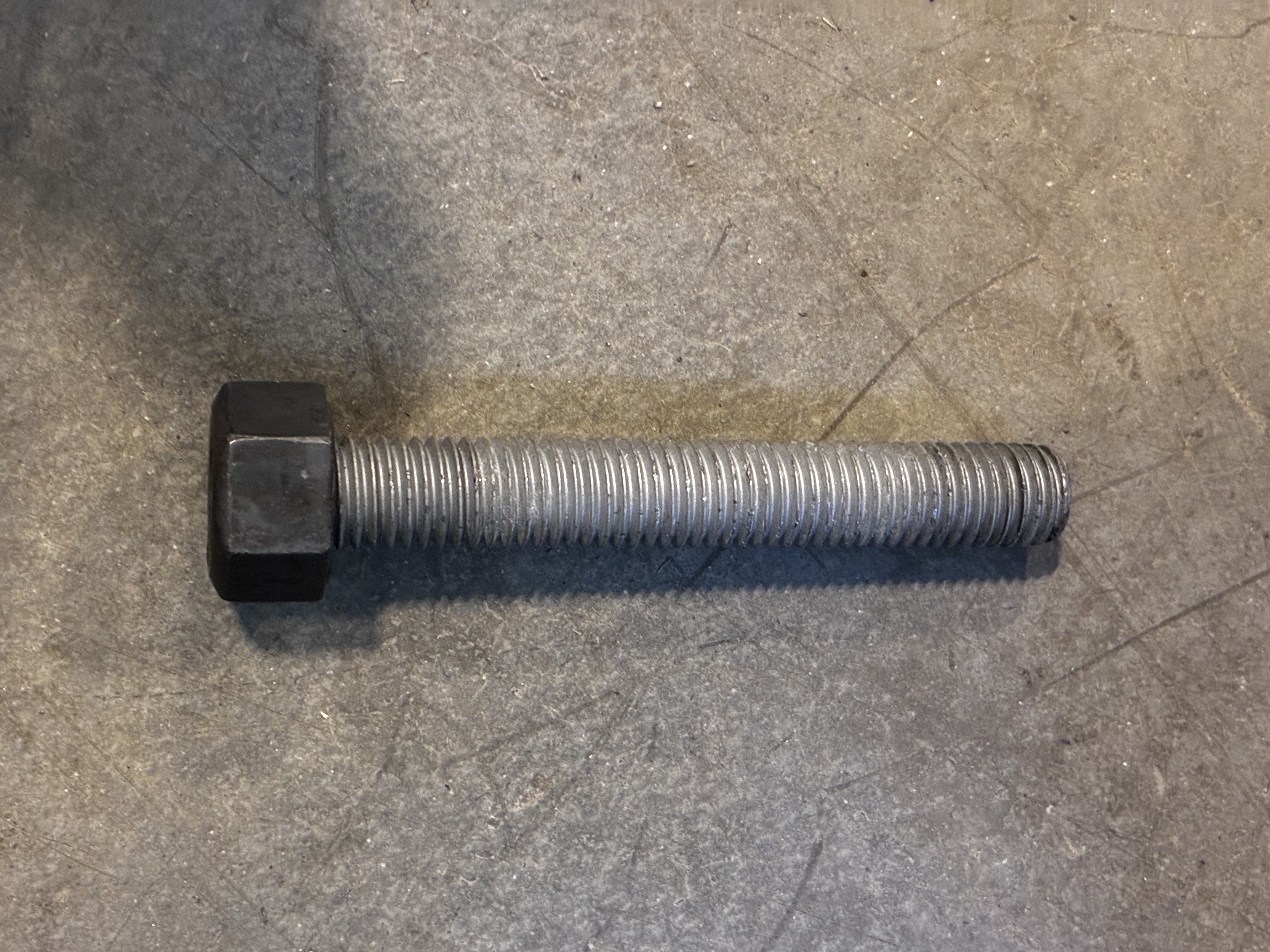
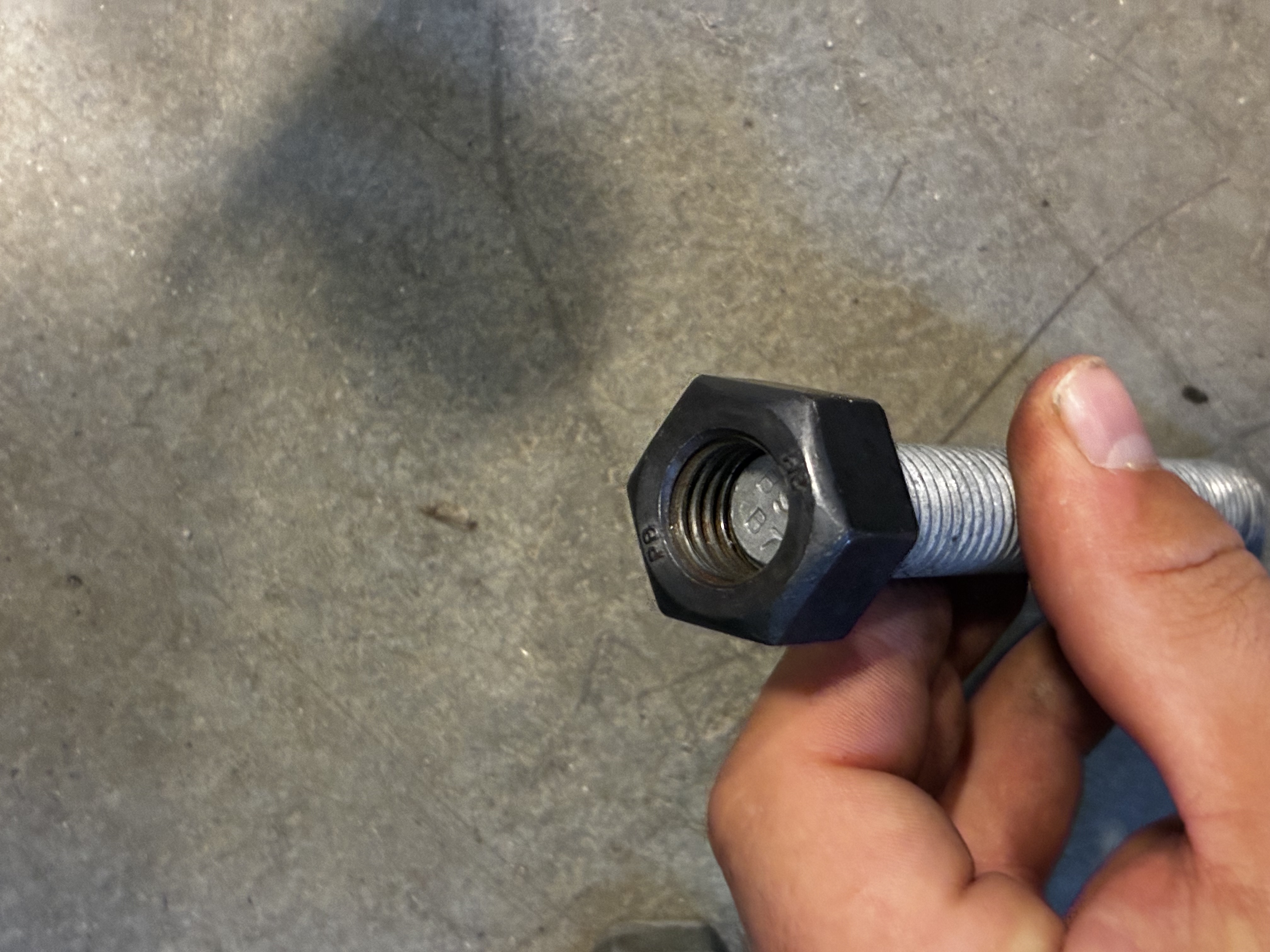
The photographs show a threaded component with two nuts: a silver nut described by the author as hot-dip galvanized and matched to this assembly, and a dark original nut. The author reports that the matched silver nut threads smoothly onto the hot-dip galvanized bolt, while the dark original nut of the same nominal metric size does not fit that bolt.
This is a useful example of functional fit after galvanizing. The photographs alone do not establish thread tolerance class, pitch, coating thickness or assembly load capacity. The dark colour does not identify the original nut’s surface treatment.
Electroplating and hot-dip galvanizing
Zinc electroplating and hot-dip galvanizing are both used to protect bolts and nuts. Naming the process explicitly avoids confusion between two different ways of applying zinc.
ISO 4042 covers electroplated fastener coating systems; ISO 10684 addresses hot-dip galvanized fasteners. Hot-dip galvanizing is an established option that requires suitable dimensional allowances.
Why might an ordinary nut bind?
Zinc occupies space on the external thread flanks, increasing the effective thread size and reducing clearance. Hot-dip coatings are generally thicker than common electroplated coatings, making allowance particularly important. Galvanizers Association.
The same nominal metric size does not guarantee interchangeability. Thread pitch, tolerances and the intended coating system must also match. Binding may additionally involve damage, dirt or local excess zinc.
How is space for zinc provided?
A common approach is to tap the nut after galvanizing to a specified oversize, allowing it to accept the coated external thread. Systems using an undersized external thread also exist. The pair must follow an appropriate specification; allowance is not an arbitrary workshop adjustment. AGA — Threaded assemblies.
Post-galvanizing tapping removes zinc from the nut’s internal thread. In the assembled connection, zinc on the mating bolt protects this thread. This is a recognised system and does not justify casually stripping zinc from external threads. AGA — Overtapping allowances.
What does the example demonstrate?
The reported ease of assembly is consistent with adequate coating allowance. Confirming quality requires verification of thread dimensions and pitch, the tolerance system, markings, property classes and manufacturer documentation. Hand assembly is a useful functional check, but it does not prove load capacity or replace specified inspection.
Practical takeaway: the bolt, nut and zinc coating form a matched system. Hot-dip galvanized components can assemble smoothly when coating allowance is designed in. Nominal metric size alone is insufficient when choosing a replacement nut.
References and sources
- ISO 10684 — Fasteners — Hot dip galvanized coatings.
- ISO 4042 — Fasteners — Electroplated coating systems.
- Galvanizers Association — Galvanized nuts and bolts.
- American Galvanizers Association — Overtapping allowances; Threaded assemblies.

Author
Branimir Krpez
Quality technician specialising in corrosion protection, protective coatings and quality control. On Zincor Systems, he publishes technical articles, analyses and case studies to share practical knowledge about corrosion and metal protection.
Send an email