
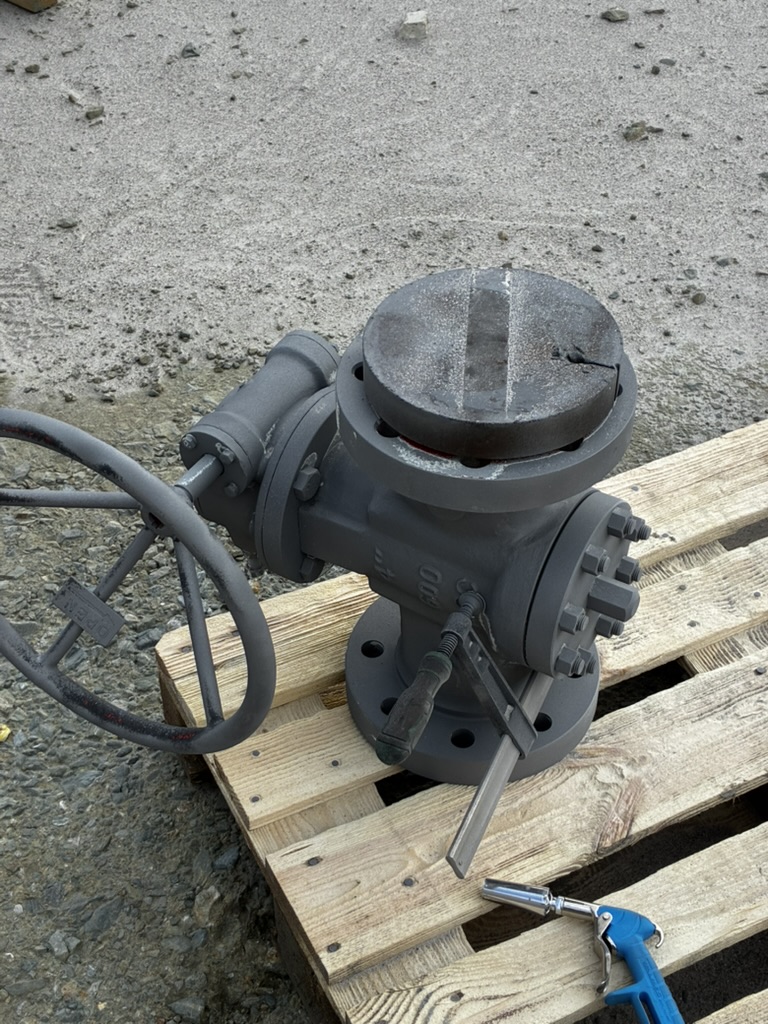
Example of steel reinforcement after abrasive cleaning/blasting before protective coating application.
When discussing steel corrosion protection, most people first think of paint or coating. However, the durability of every protection system depends largely on surface preparation before coating application.
“A coating is only as good as the surface preparation underneath it.”
This is why the surface cleanliness grade is checked after blasting according to ISO 8501-1, where the most common grades are Sa 2, Sa 2½ and Sa 3.
What does the “Sa” designation mean?
The Sa designation refers to abrasive blast cleaning. The number after Sa indicates how thoroughly the surface has been cleaned of rust, oxides, old coatings, contamination and mill scale. The higher the number, the cleaner the surface.
Sa 2 – thorough blast cleaning
At Sa 2 grade, most visible rust, old coatings and contamination are removed. However, small stains, oxide traces and light corrosion residues may remain on the surface.
Such a surface looks much better than manually cleaned steel, but it is not suitable for the most demanding protection systems. Sa 2 is relatively rarely used today on new industrial structures.
Sa 2½ – industrial standard
Sa 2½ is the most commonly required surface preparation grade in the oil and gas industry, energy sector, process industry and shipbuilding.
The surface must be almost completely cleaned of rust, oxides, mill scale and old coatings. Only very slight traces in the form of shadows or discoloration are permitted. After blasting, the surface has a uniform metallic appearance.
Sa 2½ is most often required for coating systems according to ISO 12944 in corrosivity categories C3, C4 and C5.
Sa 3 – white metal
Sa 3 represents the highest cleanliness grade after blasting. The surface must be completely free from all visible traces of rust, oxides, old coatings, mill scale and contamination.
After blasting, the steel has an almost uniform silvery appearance. Sa 3 is used for offshore structures, highly aggressive environments, special technical requirements and certain systems with zinc silicate coatings.
Why does surface preparation often matter more than the paint itself?
Imagine applying a high-quality epoxy coating over a rusty surface. Although the coating itself may be good, it still depends on the substrate underneath.
If rust, salt, grease or poorly adhering old coating remains under the coating, lifting, underfilm corrosion and premature system failure will develop over time.
What is checked before coating application?
- degreasing and removal of surface contamination
- abrasive blasting
- cleanliness grade verification
- roughness measurement
- climatic condition check
What do investors most often require?
- cleanliness grade: Sa 2½
- roughness: Medium G or Medium S
- verification according to ISO 8501 and ISO 8503
- coating thickness control according to ISO 19840
That is why Sa 2½ has practically become the industrial standard for most corrosion protection systems.
Conclusion
When a protective system fails prematurely, the cause is very often poor surface preparation, not the coating itself.
For this reason, industrial corrosion protection places special emphasis on blasting and surface cleanliness control. In most cases, Sa 2½ provides the best balance of quality, durability and cost, and represents the standard for long-term protection of steel structures.
References and sources
- ISO 8501-1 — Visual assessment of steel surface cleanliness.
- ISO 8503 — Surface roughness characteristics of blast-cleaned steel substrates.
- Herbert H. Uhlig and R. Winston Revie, Corrosion and Corrosion Control.
- Tihana Kostadin, Material Protection.
- KIO-EI training material on corrosion protection.

Author
Branimir Krpez
Quality technician specialising in corrosion protection, protective coatings and quality control. On Zincor Systems, he publishes technical articles, analyses and case studies to share practical knowledge about corrosion and metal protection.
Send an email