
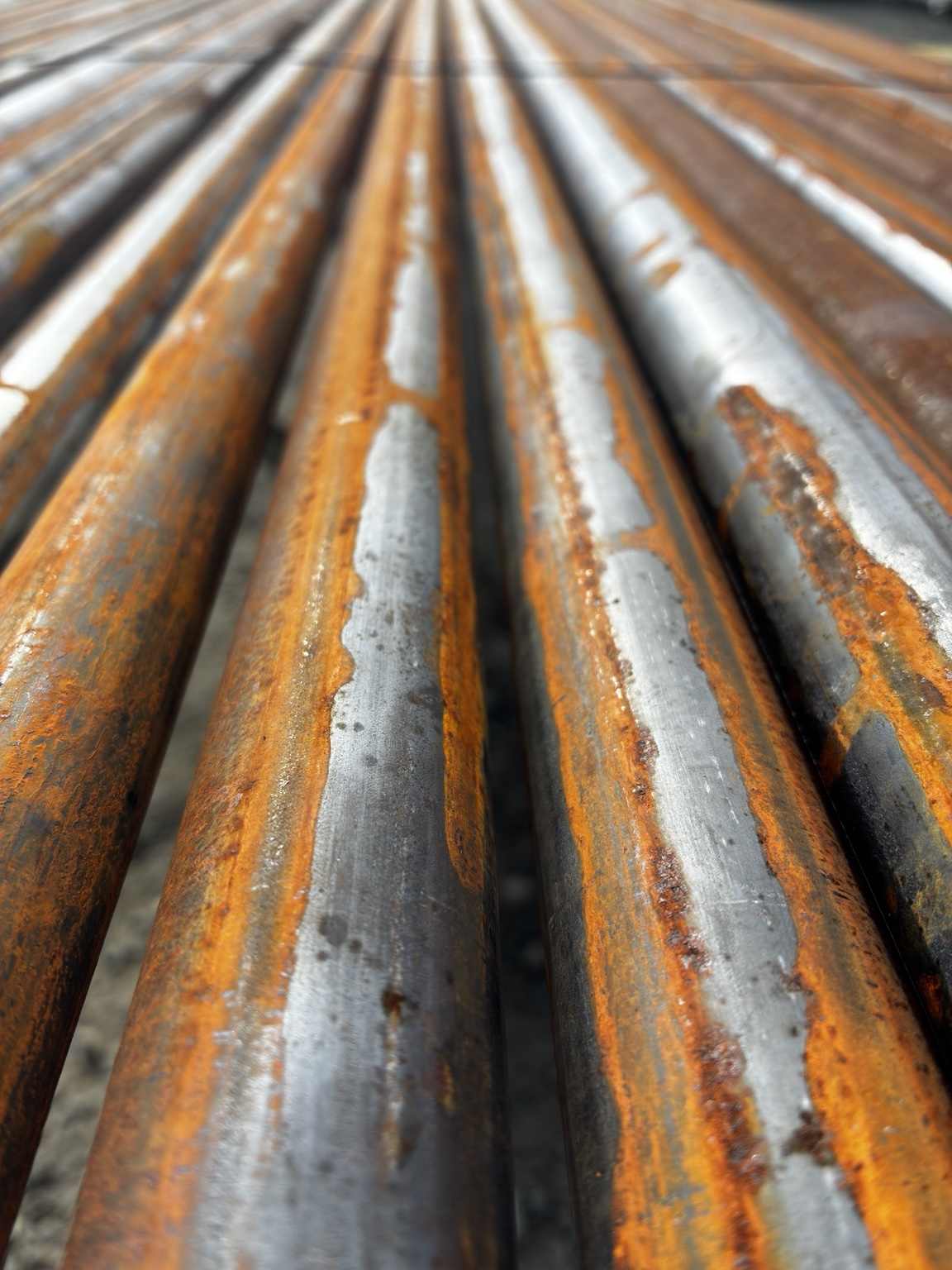
Corrosion is a natural process of metal deterioration caused by chemical or electrochemical reactions with the environment. The best-known form is rusting of steel, but corrosion also occurs on aluminium, copper, zinc and their alloys.
Although corrosion is often viewed only as an aesthetic problem, its consequences can be much more serious. Loss of material thickness, reduced mechanical strength, pipeline leaks, equipment failures and costly repairs are only some of the problems corrosion causes in industry.
Why do metals corrode?
Most metals used today are obtained by processing ore. During production, a large amount of energy is invested to extract the metal from its natural state.
Corrosion is the process by which metal gradually returns to its more stable natural state. In other words, nature tends to reverse the energy spent during metal production.
That is why unprotected steel exposed to the atmosphere, water or soil starts to corrode over time.
How does corrosion form?
Four elements are most often required for corrosion to occur:
- metal
- water or moisture
- oxygen
- an electrolyte, meaning a solution that conducts electric current
When these conditions are present, very small anodic and cathodic areas form on the metal surface. At the anodic area, the metal dissolves, while electrons move toward the cathodic area where they react with oxygen and water. The result is the formation of corrosion products, or rust.
Where does corrosion develop fastest?
The corrosion rate depends on environmental conditions. Corrosion is especially pronounced in:
- marine atmosphere
- industrial areas
- areas with high humidity
- areas with frequent condensation
- soil containing salts and moisture
Due to the presence of chlorides, marine atmosphere is one of the most aggressive environments for steel structures.
Consequences of corrosion
Corrosion causes major economic losses worldwide. The most common consequences are:
- reduced load-bearing capacity of structures
- leakage of tanks and pipelines
- increased maintenance costs
- production downtime
- safety risks for people and the environment
- premature equipment replacement
It is estimated that corrosion-related costs reach several percent of the gross domestic product of developed countries.
Types of corrosion
Corrosion can appear in different forms. The most common are uniform corrosion, galvanic corrosion, pitting corrosion, crevice corrosion and stress corrosion.
Uniform corrosion spreads evenly across the metal surface. It is the most common and easiest-to-predict form of corrosion.
Galvanic corrosion occurs when two different metals are connected in the presence of an electrolyte. The less noble metal corrodes faster, while the more noble metal is protected.
Pitting corrosion is characterized by small but deep pits on the metal surface. It is especially dangerous because it can quickly penetrate the wall thickness with few visible signs on the surface.
Crevice corrosion occurs in narrow spaces such as joints, bolted connections, gaskets and sheet overlaps where moisture is retained.
Stress corrosion occurs through the combined action of tensile stress and a corrosive environment and can lead to sudden material fracture.
How is corrosion prevented?
Corrosion cannot be completely eliminated, but it can be significantly slowed down by applying appropriate protection methods.
- Protective coatings create a barrier between the metal and the environment.
- Hot-dip galvanizing covers steel with a zinc layer that provides long-term protection.
- Cathodic protection is applied on pipelines, tanks and offshore structures.
- Correct material selection can significantly extend the service life of the structure.
- Regular inspection allows repair before more serious problems develop.
Conclusion
Corrosion is a natural process that follows almost all metal structures throughout their service life. Although it cannot be completely stopped, correct design, surface preparation, protective system selection and regular inspection can significantly extend equipment life and reduce maintenance costs.
In industries such as energy, oil and gas, shipbuilding and process industry, effective corrosion protection is one of the key factors for safe and economical plant operation.
References and sources
- ISO 8044 — Corrosion of metals and alloys — Vocabulary.
- ISO 12944-1 — General introduction to corrosion protection by protective paint systems.
- Mars G. Fontana, Corrosion Engineering.
- Denny A. Jones, Principles and Prevention of Corrosion.
- Herbert H. Uhlig and R. Winston Revie, Corrosion and Corrosion Control.

Author
Branimir Krpez
Quality technician specialising in corrosion protection, protective coatings and quality control. On Zincor Systems, he publishes technical articles, analyses and case studies to share practical knowledge about corrosion and metal protection.
Send an email