
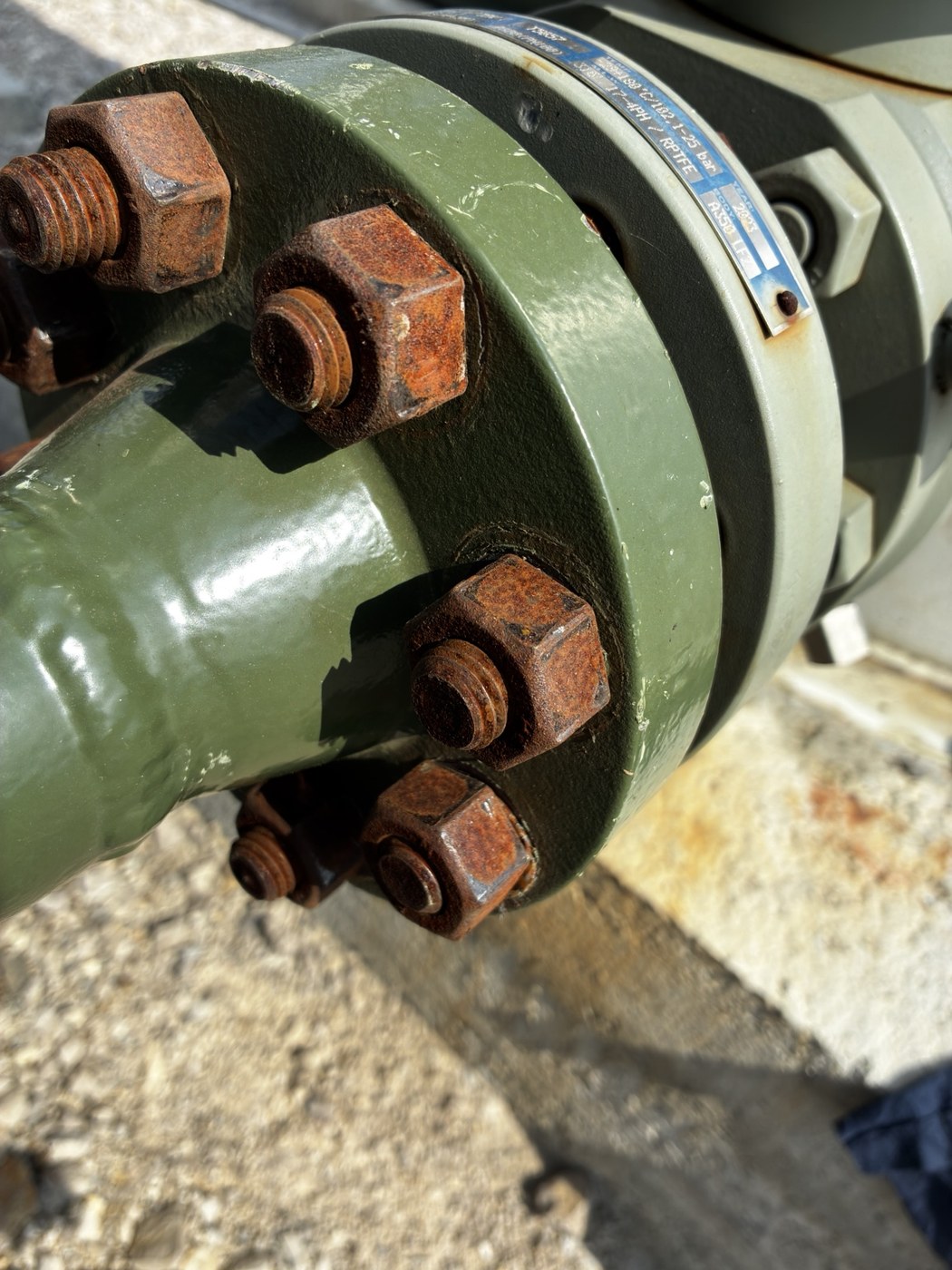
In the basic article, it was explained that corrosion occurs when metal, water, oxygen and an electrolyte together create the conditions for metal degradation. Here we go one step deeper: microscopic anodic and cathodic areas form on the steel surface. Together, these areas create a small electrochemical cell.
It is important to understand that a single piece of steel does not need to be connected to another metal in order to corrode. It is enough for small differences to exist on its surface: differences in composition, stress, roughness, oxides, deposits, oxygen availability or thickness of the moisture film. Because of these differences, one area becomes the anode and another becomes the cathode.
Why does steel want to corrode at all?
In nature, iron is most commonly found in the form of oxides and other compounds. To obtain metallic iron and steel from ore, a large amount of energy is introduced during production. Metallic steel is therefore less stable energetically than its natural oxide forms.
Corrosion is a return toward a more stable state. In practice, this means that iron in metallic form gradually transforms into ions and oxides, that is, into corrosion products that we recognize as rust.
Simply put: steel is a technically useful form of iron, but rust is a more natural and stable state for iron.
Anode: the place where metal disappears
The anode is the area where iron loses electrons and changes from the metallic state into the ionic state. This is the actual loss of metal.
This reaction means that an iron atom leaves the metal lattice and enters the thin electrolyte layer as an Fe²⁺ ion. The electrons remain in the metal and travel toward the cathodic area. That is why corrosion, meaning metal dissolution, occurs at anodic sites.
Cathode: the place where oxygen is consumed
The electrons produced at the anode have to be consumed somewhere. In neutral and mildly alkaline conditions, which are common in atmospheric corrosion of steel, the most important cathodic reaction is oxygen reduction.
Oxygen from the air dissolves in the thin moisture film on the metal surface. When it reaches the cathodic area, it accepts electrons and hydroxide ions OH⁻ are formed. Without the cathodic reaction, anodic dissolution cannot continue for long because the electrons would have nowhere to be consumed.
How does rust form?
Iron ions formed at the anode react with hydroxide ions formed at the cathode. This creates the first corrosion products.
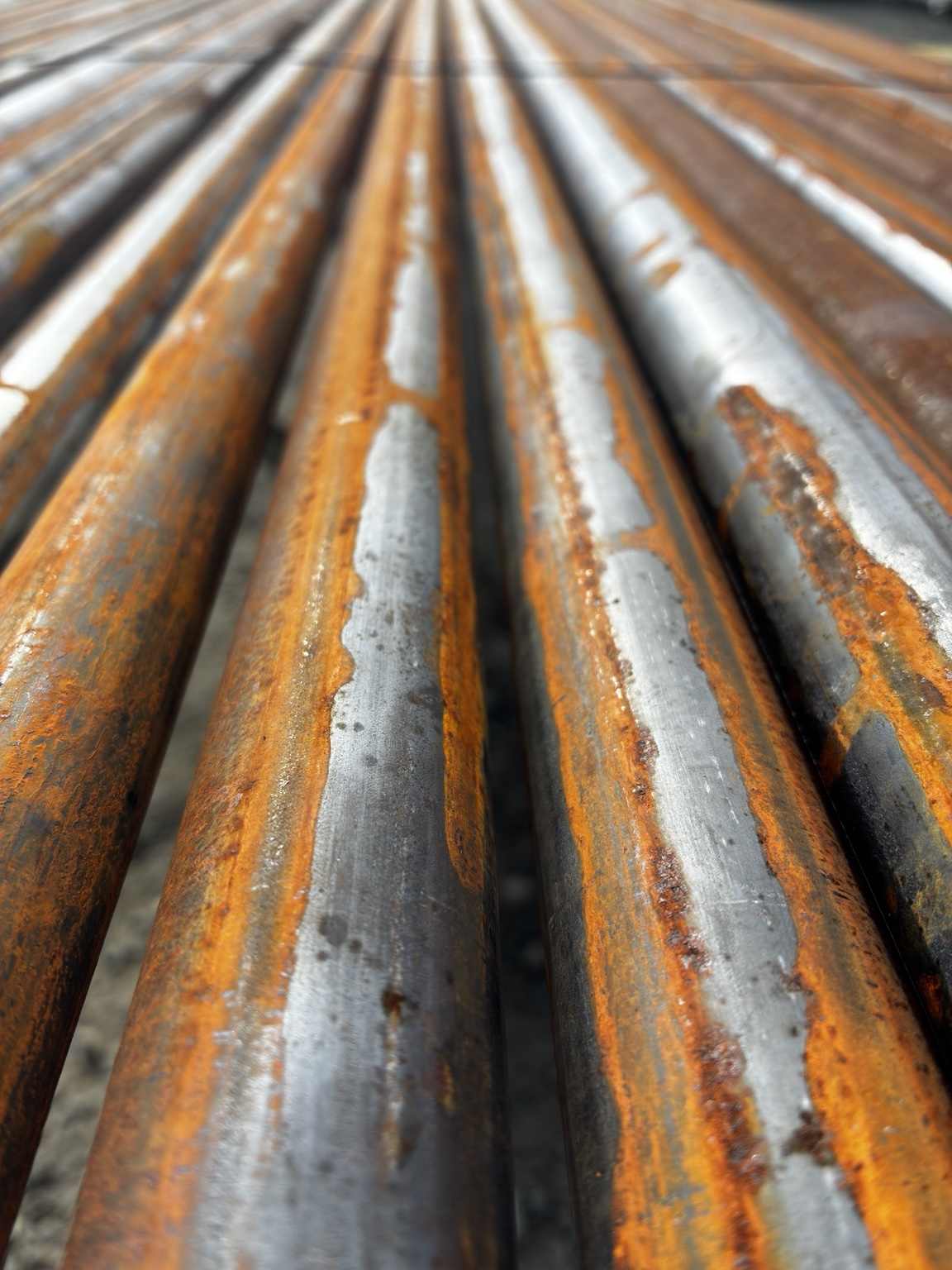
Iron(II) hydroxide is then further oxidized in the presence of oxygen and water. Iron oxides and oxyhydroxides are formed, for example FeOOH, Fe₂O₃ · nH₂O and Fe₃O₄. For this reason, rust is not one single chemical substance, but a mixture of several corrosion products.
The colour of rust may be orange, red, brown or dark, depending on the amount of oxygen, moisture, salts, temperature and exposure time.
Why does rust not protect steel?
Some metals form compact oxide layers that protect them. Aluminium forms a very thin and adherent oxide film, while stainless steel relies on a chromium-rich passive layer. With ordinary carbon steel, the situation is different.
Rust is generally porous, uneven and poorly adherent. Moisture is retained inside it, and oxygen and ions can pass through cracks and pores. Because of this, steel can continue corroding beneath already formed rust.
The role of the electrolyte: why is moisture dangerous?
An electrolyte is a thin layer of water containing dissolved ions. It does not have to be a puddle of water. Dew, condensation, damp dust, sea salt on the surface or water retained in a crevice is enough.
The more conductive the electrolyte is, the more easily the electrochemical cell operates. This is why salts, especially chlorides, accelerate corrosion. Chlorides increase the electrical conductivity of moisture on the surface and can destabilize protective oxide layers.
Differential aeration: why do joints and crevices often fail first?
On flanges, bolted joints, under gaskets, washers, dirt deposits or damaged coating, there is often a difference in oxygen availability. The surface with less oxygen usually becomes anodic, and local corrosion develops there.
This explains why corrosion often starts exactly at locations that are difficult to clean and difficult to coat properly: threads, nut edges, sharp edges, transitions, crevices and zones around gaskets.
What do protective coatings have to do with it?
A protective coating is not only a decorative layer. Its basic function is to slow down or prevent the access of water, oxygen and aggressive ions to the steel surface. In this way, the electrochemical process is interrupted or significantly slowed down.
If the surface is poorly prepared, if salts remain on the substrate, if edges are not rounded, if the film thickness is too low or if pores and damage are present, a corrosion cell can form beneath the coating. In that case, corrosion is not immediately visible, but it can spread under the film and lead to lifting, blistering or peeling of the coating.
Conclusion
Electrochemical corrosion of steel is based on the simultaneous operation of anodic and cathodic areas. At the anode, iron becomes ions and the metal is consumed. At the cathode, oxygen is most often reduced. The electrolyte enables ion transport, while the metal enables electron transport.
When this circuit closes, corrosion begins. For that reason, surface preparation, salt removal, moisture control, proper edge treatment, sufficient coating thickness and regular inspection are critical in practice. The goal is not only to “paint the steel”, but to interrupt the conditions that allow the corrosion cell to operate.
References and sources
- Mars G. Fontana, Corrosion Engineering, 3rd edition.
- R. Winston Revie, Uhlig’s Corrosion Handbook.
- Denny A. Jones, Principles and Prevention of Corrosion.
- Herbert H. Uhlig and R. Winston Revie, Corrosion and Corrosion Control.
- ISO 8044 — Corrosion of metals and alloys — Vocabulary.
- ISO 12944 — Corrosion protection of steel structures by protective paint systems.

Author
Branimir Krpez
Quality technician specialising in corrosion protection, protective coatings and quality control. On Zincor Systems, he publishes technical articles, analyses and case studies to share practical knowledge about corrosion and metal protection.
Send an email